Is It Safe To Cycle Between Hawke's Bay Wineries After Tasting?
Pacing your tastings and the ride back, what the Hawke's Bay Trails are like, and what the self-guided bike tours include, so you can judge a bike-and-wine day honestly.
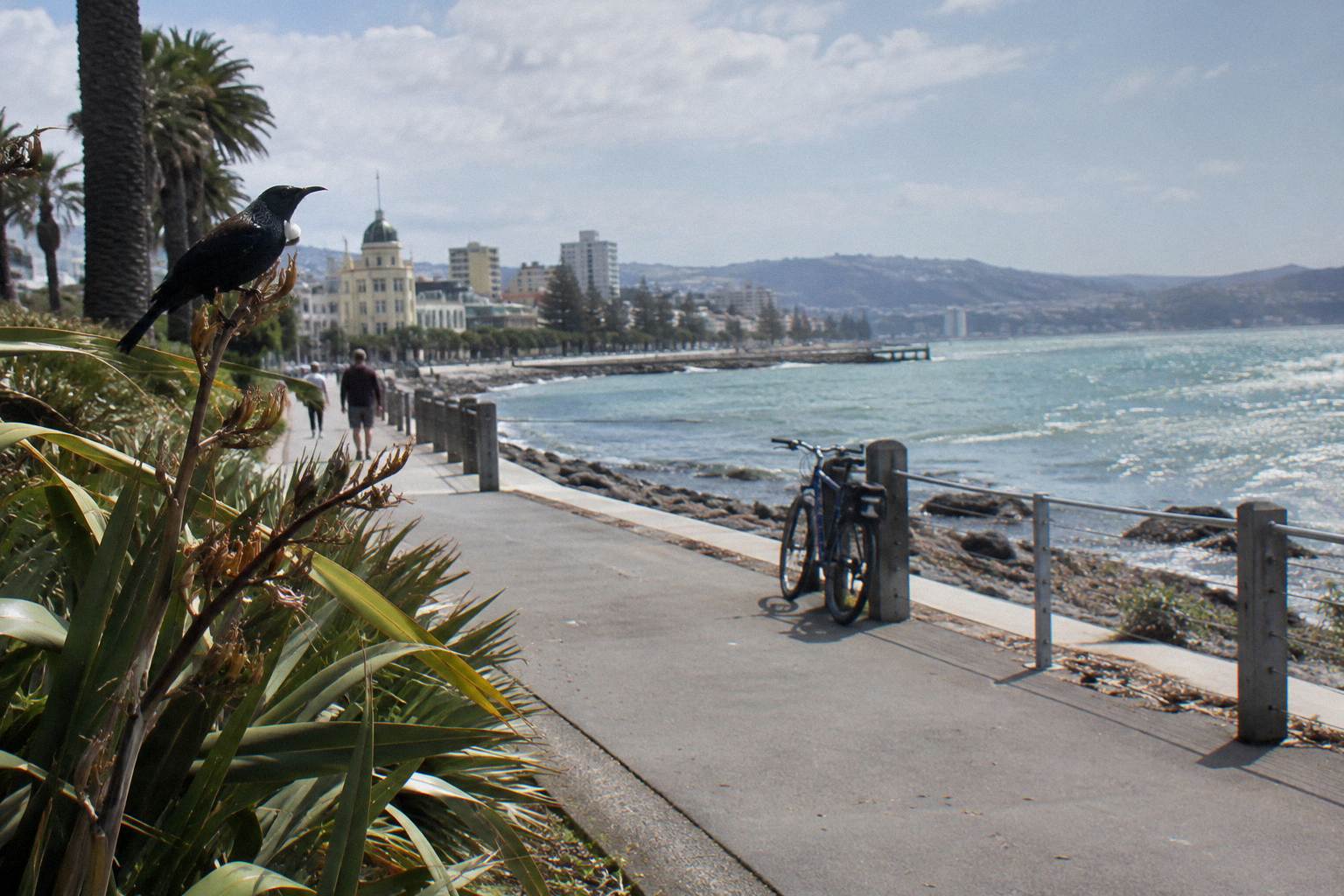
Yes, cycling between Hawke's Bay wineries is safe when you pace the tastings, because the region offers nearly 200 km of mostly flat, grade 1 to 2 trails built with cyclists in mind. Skip a tasting when you need to, pace the pours across the day, or let a van or tour driver handle the trip home.
That is the whole question in one paragraph, but the details matter: what the drink-driving limits mean for anyone behind the wheel, and how that shapes a day on the bike, what the trails are like on the ground, what the two self-guided products give you, how to structure a day so you are not racing the return van while wine is still in the glass, and when a driven small-group tour is simply the better call.
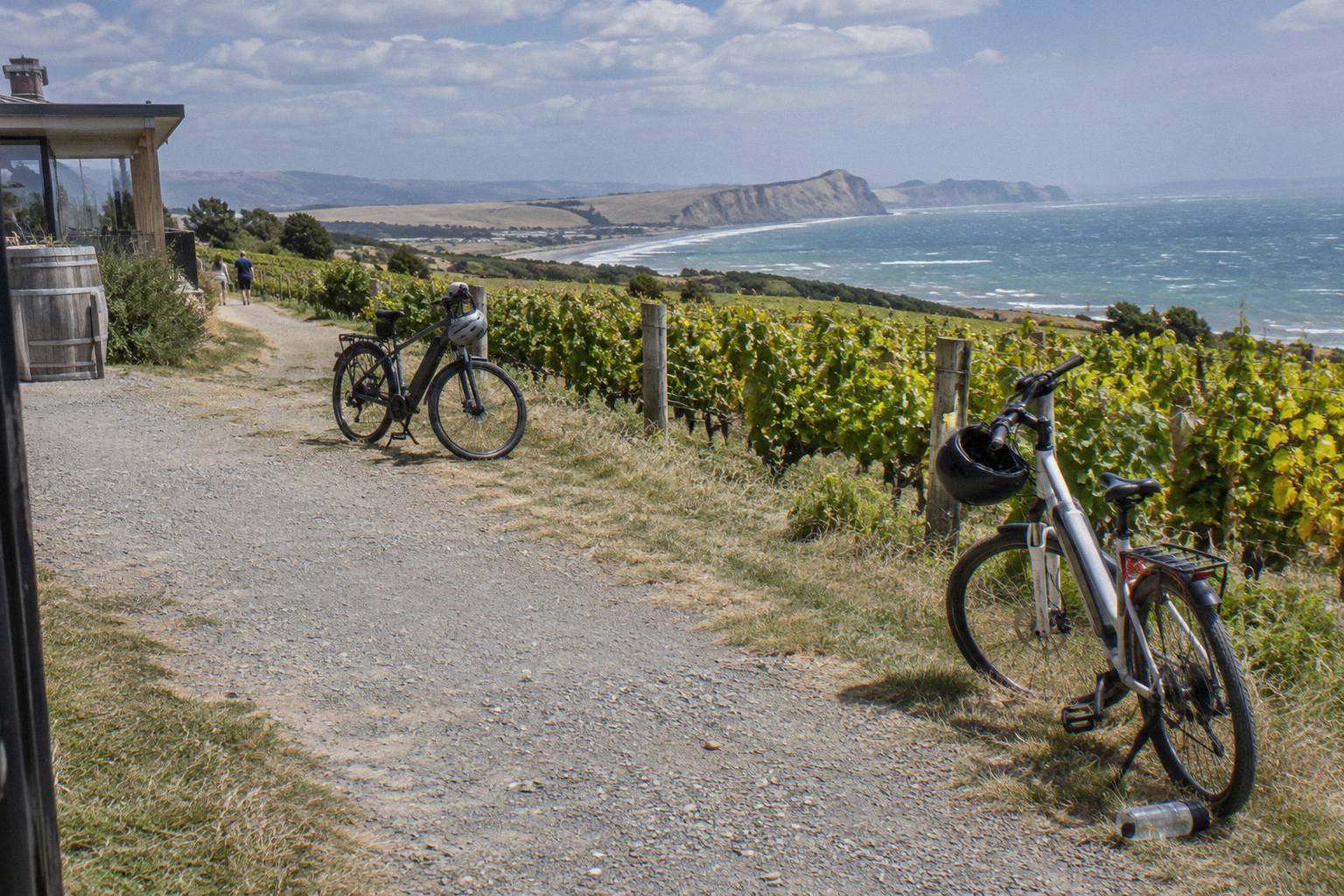
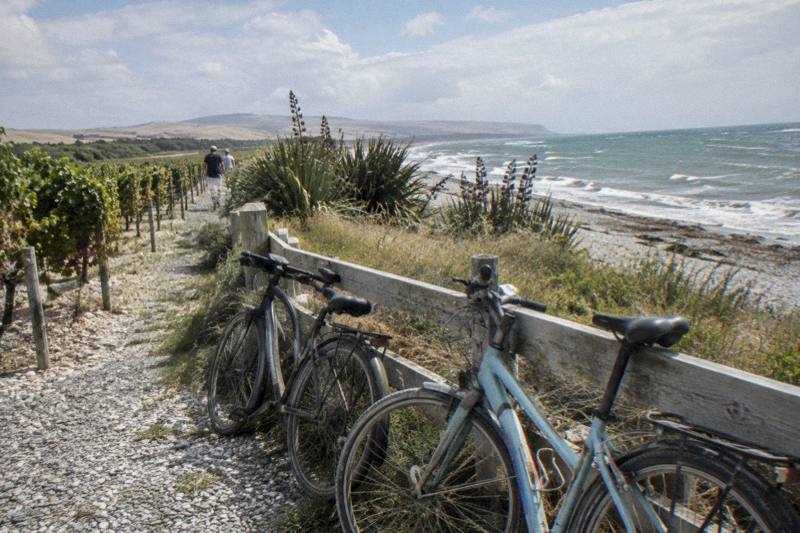
Start with the framing most people get wrong. A wine-and-bike day in Hawke's Bay is not a pub crawl on wheels. The two cycling products sold here, the Cape Coast Winery Tour On E-Bikes and the Coast To Vineyards Self-Guided Cycle Tour, both list their tasting stops as optional extras with fees not included. The booking pages frame the day around riding a stretch of one of New Zealand's 23 Great Rides, with cellar doors as stops you choose to make, not stops you are committed to. That design is the single biggest safety feature of the day, because it means the rider, not an itinerary, decides how much is tasted and when.
The second framing point: nobody on this page will tell you that a certain number of tastings is "safe" or that a tasting keeps you under any legal limit. No number of tastings counts as a safe amount for a rider. What you control is pacing, food, water, and how you get back: a supported tour, e-bike, or planned pickup at the end. Riders who want to taste seriously should use the return transport or the van rather than riding back, or book a driver-led tour instead. Our companion guide on planning a Hawke's Bay bike and wine day covers the route options in more detail.
The rest of this page explains what each choice means for the tasting question.
What Do New Zealand's Drink-Driving Limits Mean For A Bike And Wine Day?
The NZ Transport Agency limits are road-driver limits: drivers 20 and over are held to 250 micrograms of alcohol per litre of breath or 50 milligrams per 100 millilitres of blood, a threshold lowered from 400 and 80 on 1 December 2014, and drivers under 20 must have zero alcohol. For a bike day between wineries, the practical answer is pacing your tastings and planning how you get back.
That is the legal picture in full, and it is worth reading twice because two parts of it surprise visitors. First, the zero-alcohol rule for under-20s catches out younger travellers who assume the adult limit applies to them. Second, the limits were tightened from the older 400 and 80 figures, so advice from an older guidebook or a forum thread from years ago describes limits that no longer exist. The current figures are published by the NZ Transport Agency.
The purchase age matters too. Under the Sale and Supply of Alcohol Act 2012 the purchase age on licensed premises is 18, and it is an offence to supply alcohol to an under-18 or to an intoxicated person. Cellar doors take this seriously and will ask for proof of age. Several tours in the region state a minimum age of 18 on their booking pages, including the driven Hawke's Bay Scenic 4 Premium Wineries Tour, whose booking page notes that to taste wine in New Zealand you must be at least 18 and proof of age may be required. No official page says wine tours in general require 18 and over; minimum ages come from each listing.
What this means for a cyclist is simple and we will state it without hedging: the answer to alcohol and riding is the tour driver, the return van, or a designated rider who skips the tastings. Split a tasting flight, take longer between stops, eat properly, and if the day has gone further than planned, use the return transport that both bike products provide rather than riding back. Nobody should plan a day that depends on guessing their own breath alcohol on a bicycle.
Not Sure About Riding Back After The Tastings?
The Cape Coast e-bike day builds the answer in: a van shuttle from the meeting point, a return transfer at the end of the day, and every tasting stop optional. Free cancellation up to 24 hours before is shown on the booking page.
How Do The Hawke's Bay Trails Actually Feel To Ride?
The network is nearly 200 km of trails, one of New Zealand's 23 Great Rides, mostly flat and graded 1 to 2, which are the easiest grades on the scale. Riders describe wide, off-road paths along river stopbanks and the coast rather than mountain-bike terrain. The rides connect Napier, Ahuriri, Taradale, Hastings and the Cape Coast, so a winery day rarely requires sharing a narrow shoulder with traffic.
Grade 1 is flat and smooth, suitable for beginners and families; grade 2 adds gentle slopes and a softer surface. There is nothing in either grade that an average rider on an e-bike cannot handle, and e-bikes flatten the few rises that do exist. The official trail information, now hosted at hbtrails.nz, describes the network and its rides; we quote the network figure only, because ride lengths vary by which loop you string together, and a distance printed for one loop would mislead a rider planning another.
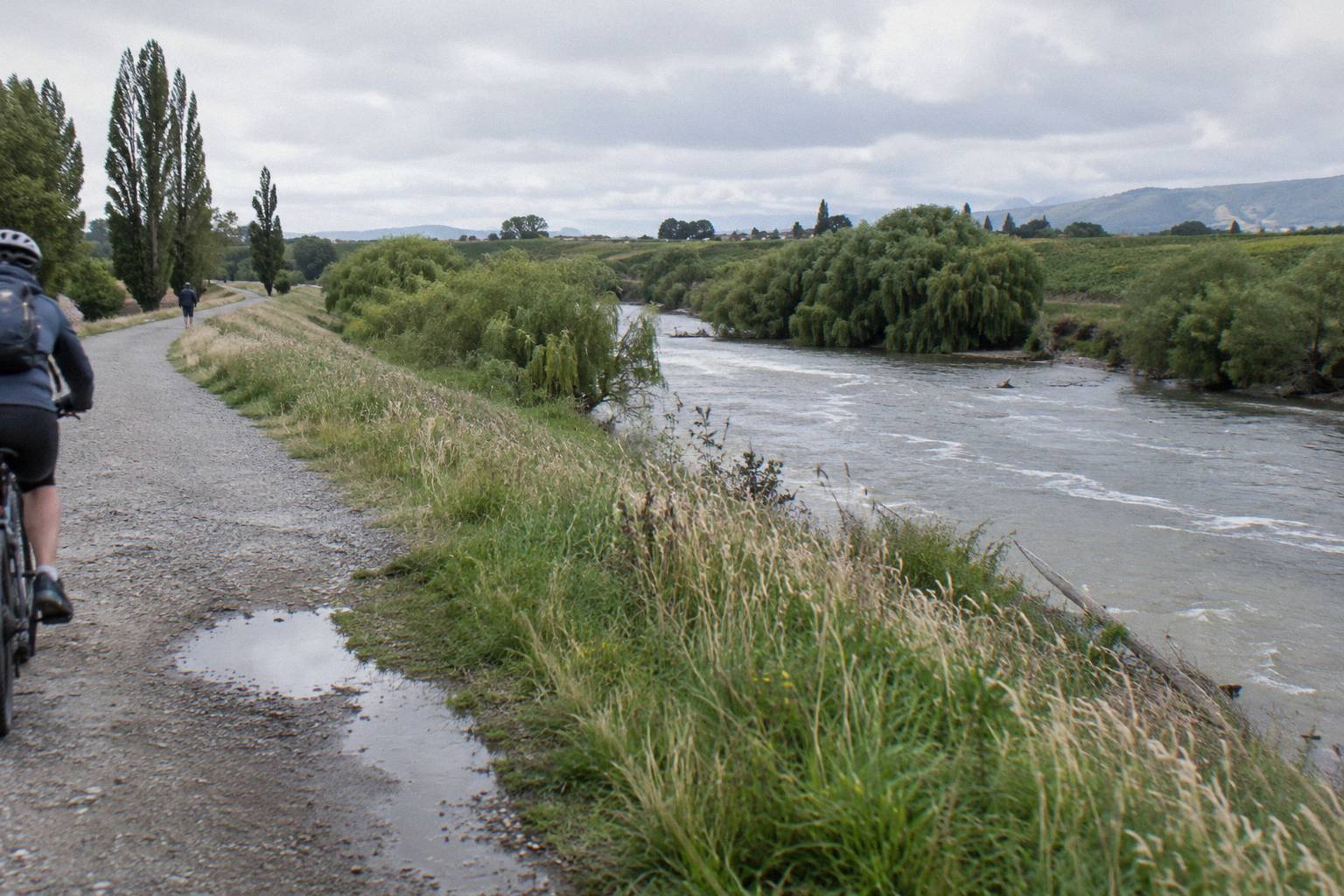
Two practical points follow from the terrain. First, because the trails are easy, fatigue and alcohol, not fitness or technical skill, are the things that actually degrade a rider's day. A rider who has done four cellar doors and skipped lunch is a different rider from the one who set out in the morning, whatever the trail grade says. Second, because the network is mostly off-road, the usual urban hazards, parked car doors and fast traffic, are less of a factor than visitors expect, though crossings and short road links still need normal care.
Wind and sun are the underestimated elements. The region has, in the words of the regional winegrowers' body, a long, hot growing season with low rainfall tempered by cool coastal breezes, and the same conditions that ripen the grapes ride straight across the flats. The Cape Coast e-bike booking page advises comfortable clothes, sunscreen and water, which is exactly the right kit list for a day that can run from mid-morning to 4pm.
What Do The Self-Guided Bike Tours Include?
Both self-guided bike tours include your bike or e-bike, a helmet, and maps. The Cape Coast Winery Tour On E-Bikes (from US$83, rated 4.8 from 69 reviews) adds panniers, route instructions, van transfers, and a return transfer, while the Coast To Vineyards Self-Guided Cycle Tour (from US$50, rated 4.9 from 37 reviews) includes a lock, bag, mechanical assistance, and 4:00 PM return transport from Black Barn.
Notice what is not on either list: tasting fees, food, and a guide. On both products every cellar door is a stop you choose to make and pay for yourself, and the booking pages say so. This is where the safety question becomes a planning question, because a self-guided rider is also a self-managed rider.
| What the day gives you | Cape Coast Winery Tour On E-Bikes | Coast To Vineyards Self-Guided Cycle Tour |
|---|---|---|
| Price | from US$83 per person | from US$50 per person |
| Rating and reviews | 4.8 from 69 reviews | 4.9 from 37 reviews |
| Duration on the booking page | 6 hours | 6 hours |
| Bike | Electric | Electric or regular, as specified |
| Safety kit listed | Helmet, maps and route instructions | Helmet, lock, map with advice |
| Transport listed | Van transfers from the meeting point, return transfer | Return transport to Napier from Black Barn winery at 4:00 PM |
| Support listed | Route instructions, safety briefing at Cape Kidnappers | Mechanical assistance during the day |
| Tastings and food | Not included, optional stops with extra fees | Not included |
| Guide | No tour guide listed | No guide listed |
The Cape Coast day, run by Takaro Trails Cycle Tours Hawke's Bay, starts with a van shuttle from an Ahuriri or Napier city base at 9.50am and finishes by 4pm per the booking page. Its listed route names Clearview Estate, Elephant Hill, Askerne Estate, Te Mata Estate and Black Barn, each written on the page as an optional tasting stop with an extra fee. The Coast To Vineyards day, run by Napier City Bike Hire & Tours, starts at 117 Marine Parade and lists Askerne Estate, Te Mata Estate, Craggy Range, Black Barn and the Atea a Rangi Star Compass, with a booking-page note that reserving lunch or a wine tasting is recommended and essential on weekends.
The set-time return is the quiet hero of both products. Because the van leaves when it leaves and the return transport departs Black Barn at 4:00 PM, the day has a hard edge to it: you cannot drift into a fifth tasting at 3.30pm and still expect a ride. Riders who treat that deadline as a pacing tool, rather than a constraint, get the safest version of the day. Prices vary by date and group size and are confirmed on the live listing.
The Coast To Vineyards day is also the lowest from-price of anything on this site, which makes it a favourite with travellers who want the trail experience and are happy to pay cellar-door tasting fees as they go. Its 4.9 from 37 reviews is a modest pool, printed here with the count rather than dressed up.
How Do You Plan A Safer Bike And Wine Day?
Plan the day around two or three stops, not as many as fit, and treat lunch as safety equipment rather than an extra. Book the tastings the booking pages tell you to book, note the 4:00 PM return before you leave, and decide in the morning which stops you will skip if the day runs long. Riders who set the drinking plan before the first glass are the riders who finish the day without needing to guess anything.
That plan is not caution for its own sake; it is how the products are designed to be used. Both booking pages push you toward booking ahead: the Coast To Vineyards page says reserving lunch or a tasting is recommended and essential on weekends, and cellar-door capacity on a summer Saturday is limited. A rider with booked slots rides a schedule, and a schedule is the cheapest safety tool there is.
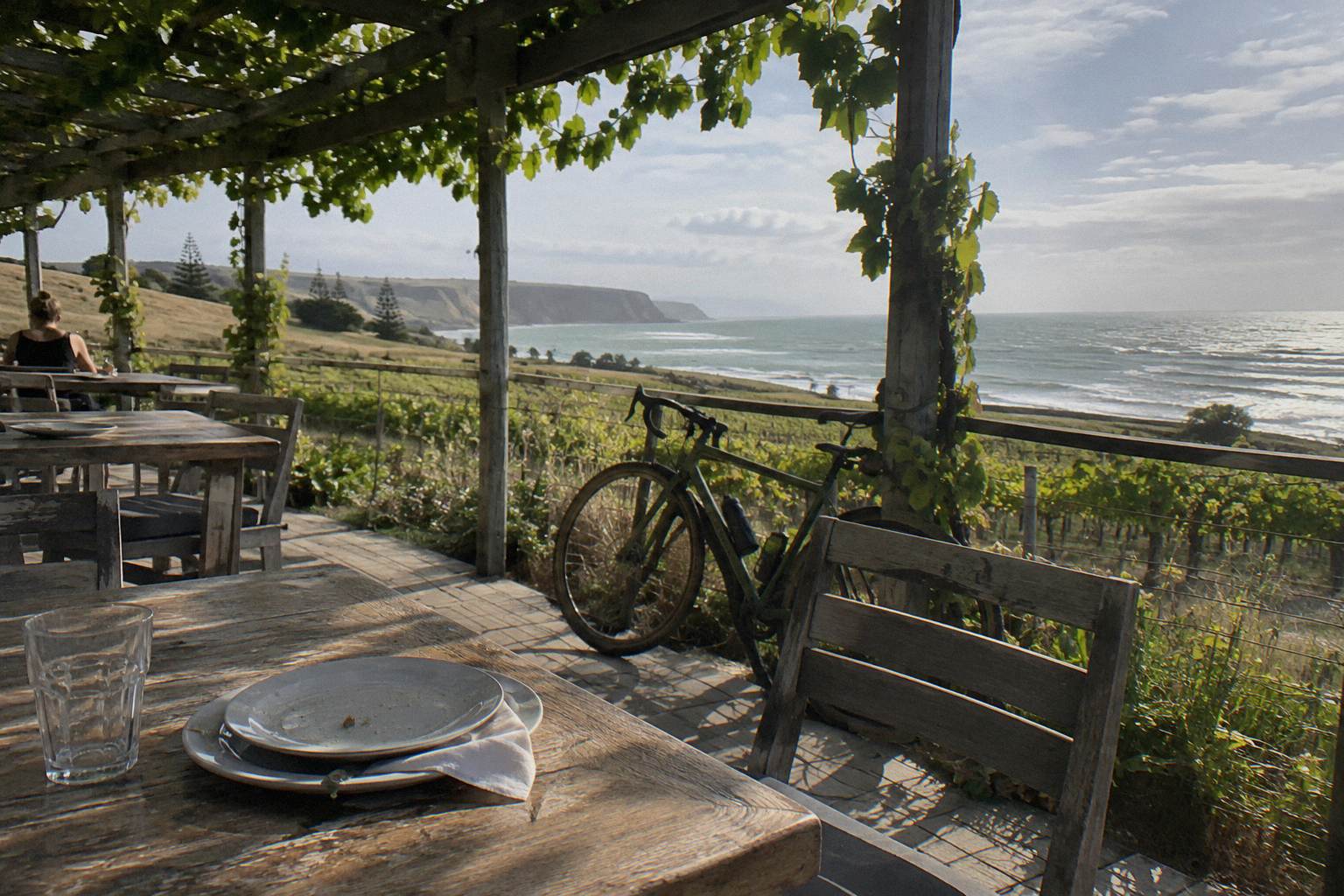
A realistic shape for the day looks like this, using the stops the booking pages actually name. Ride the first stretch before any tasting, so the morning is alcohol-free and you get a feel for the bike. Make the second stop a long lunch with one tasting, not two flights. Choose one final cellar door close to the return point, and leave a buffer so the last pour is an hour behind you before you ride again. Riders who want to taste more than that should read the next section, because the honest answer there is a driver, not willpower.
| Part of the day | Safer version | Version to avoid |
|---|---|---|
| Morning | Full breakfast, water bottle filled, first stretch ridden before any tasting | Skipping breakfast, first stop a full flight |
| Tastings | Two or three booked stops, shared flights, spit bucket used | Every cellar door on the map, back-to-back flights |
| Lunch | A proper seated meal mid-day | Snacks only, or food saved for the end |
| Final stop | One cellar door near the return point, buffer before riding | A tasting timed against the 4:00 PM return |
| Getting home | Return transport or van as listed, or a designated rider who skips tastings | Riding back with the day's tastings on board |
| Weather | Sunscreen, comfortable clothes, water, per the booking page's advice | Midday heat with no water and no shade plan |
Two reminders that belong to each booking page rather than to us: children and dogs are simply not addressed by these listings, so if your day includes either, that is a not stated, ask the operator question before you book. And tasting fees at cellar doors are paid on the day, most cellar doors charge a tasting fee, often refunded on purchase, and the fee is yours to manage as you go.
When Is A Driven Tour The Better Choice?
A driven tour wins when tasting matters more than riding. If your goal is wine, not driving, book a small-group driven half day from Napier, like the Hawke's Bay Scenic 4 Premium Wineries Tour, from US$104 per person, rated 4.9 from 16 reviews. It covers tastings, entrance fees and a food platter or semi-pizzas, with pickup from your Napier accommodation, free cancellation up to 24 hours before, and a sober driver.
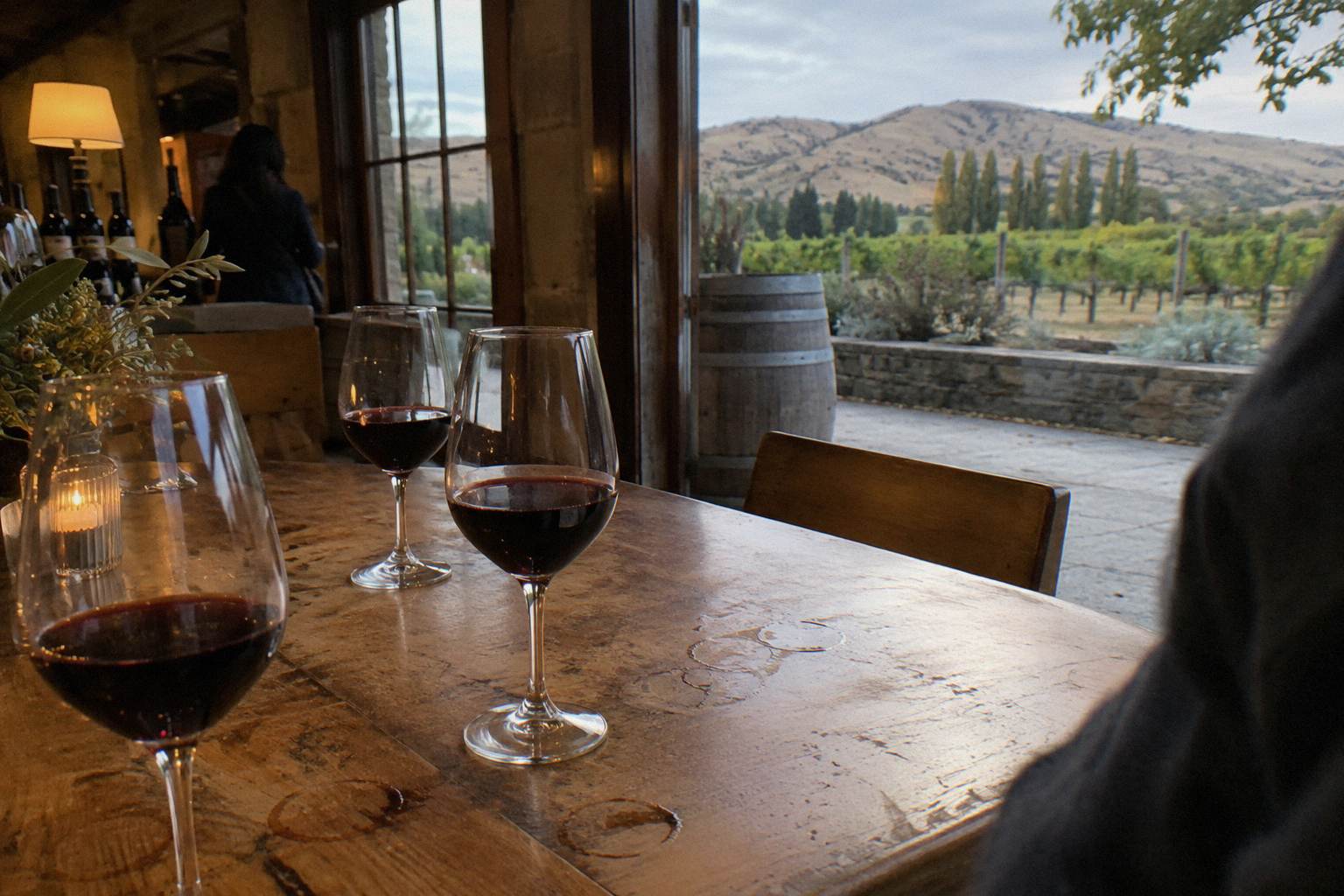
This is not a dodge of the cycling question, it is the answer the law implies. If you want to work through a flight of red blends at three cellar doors and buy bottles on the way out, doing that in a van with a professional driver is a categorically different proposition from doing it on an e-bike. Our longer comparison of guided versus independent wine touring walks through the trade-offs, and the price gap is smaller than many riders expect: the driven Scenic 4 Premium tour sits at from US$104 per person against the e-bike day's from US$83, and the driven price already contains the tastings and the platter that the bike day adds on top.
The comparison also works in the other direction. A rider whose real interest is the trail, the coast and the landscape, with one modest tasting and a long lunch, is not making a risky choice by cycling; that is the day the products were built for, and the optional-stop design makes it easy to keep the wine a small part of it. The failure mode is planning a full tasting itinerary and bolting a bicycle onto it.
| Question to ask yourself | Bike day fits | Driven tour fits |
|---|---|---|
| Main interest of the day | The trail, the coast, the scenery | The wines and the cellar doors |
| Tastings wanted | One to two, kept modest | Three or more, taken seriously |
| Riding confidence | Comfortable on flat paths for hours | Prefer not to ride at all |
| Budget shape | Low base price, fees paid as you go | Higher base price, tastings and food included |
| Who is driving home | Return van at a set time | The tour driver, throughout |
| Weather appetite | Happy riding in sun and breeze | Prefer air-conditioning between stops |
For context on the wider choice, our guide to what a Hawke's Bay winery day costs lines up every product on this site as plain figures with what each includes, without ranking one against another. The short version for this page: the two bike days and the driven half day cover the same countryside at three price points, and the safety question, not the price, is what should pick the column.
The Scenic 4 Premium day, run by Hawkes Bay Scenic Tours, is the natural fallback for riders who read the alcohol limits section and realised the wine was the point all along. Its 4.9 comes from 16 reviews, a small pool we print as it stands, and its booking page states a minimum age of 18 with proof of age possibly required.
Hawke's Bay also layers a calendar over all of this, and timing changes the cycling maths. The Bridge Pa Wine Festival returns on 23 January 2027 for its 13th year, and events like it are days when a van or a driven tour stops being a preference and becomes the obvious call.
For everything this site publishes on the region, start with Hawke's Bay Wine Tour and work outward from there.
Common Questions About Cycling Between Hawke's Bay Wineries
Is It Safe To Cycle Between Hawke's Bay Wineries After Tasting?
The trails are nearly 200 km of mostly flat, grade 1 to 2 paths, so the riding is easy. The wine is the variable: Drivers in New Zealand must keep under legal alcohol limits; on a bike, the simple answer is to pace the day., eat properly, skip a tasting when needed, use the return transport both bike products provide, or take a driver-led tour instead. No number of tastings can be called safe.
What Are New Zealand's Drink-Driving Limits, And What Do They Mean For A Bike Day?
For drivers aged 20 and over the limits are 250 micrograms of alcohol per litre of breath or 50 milligrams per 100 millilitres of blood, and drivers under 20 must stay at zero alcohol. Those driver thresholds came down from 400 and 80 on 1 December 2014. A bike day between cellar doors is better planned around pacing and the return transport.
Are The Bike Wine Tours Guided?
No. Both cycling products on this site are self-guided: their booking pages list no tour guide, provide helmets, maps and route instructions, and treat every tasting stop as optional with fees extra. You organise your own pace and your own safe return.
What Happens If I Drink More Than Planned?
Use the built-in exit. The Cape Coast e-bike day includes a return transfer, and the Coast To Vineyards day includes return transport from Black Barn winery at 4:00 PM. Do not ride back; take the transport the day was designed around.
Can I Take Children Or A Dog On A Bike Wine Tour?
Not stated on any of these booking pages; ask the operator before booking. The purchase age on licensed premises is 18, and some tours state a minimum age of 18 on their booking pages.
Which Is Cheaper, The Bike Day Or A Driven Tour?
As plain figures: the self-guided cycle day is from US$50 per person with tasting fees and food extra, the e-bike day is from US$83 per person with tastings and food extra, and the driven Scenic 4 Premium tour is from US$104 per person with tastings, entrance fees and a platter or semi-pizzas included. Prices vary by date and are confirmed on the live listing.